
FAQ
FAQ
CPR Classes – Registration, Certification & Online Options
How do I register for a CPR class with MedUltra CPR?
To register for a CPR class, visit medultralearning.com/register-for-courses/ to view our full schedule. You can filter by location, course type, and date to find a class that fits your schedule and register online in minutes.
When will I receive my certification card?
Certification cards are typically issued the same day after successful course completion. As an authorized training site, we issue official digital eCards.
You can find instructions for claiming your card here: medultralearning.com/find-my-cpr-card/
Can I take a CPR class online?
CPR certification cannot be completed 100% online if it includes hands-on skills.
Most employers and licensing organizations require in-person skills testing using a CPR manikin.
We offer blended learning (HeartCode) options, where you complete the coursework online and then attend a short in-person skills session to receive certification.
Most employers and licensing organizations require in-person skills testing using a CPR manikin.
We offer blended learning (HeartCode) options, where you complete the coursework online and then attend a short in-person skills session to receive certification.
How long is CPR certification valid?
CPR certification is valid for two years from the date of completion and expires at the end of the month issued.
How much does a CPR class cost?
CPR class pricing varies depending on the course type and format.
All pricing is listed transparently on our website and includes:
Visit the Courses page for detailed pricing and options.
All pricing is listed transparently on our website and includes:
- Instruction time
- Certification card
- Training equipment and materials
Visit the Courses page for detailed pricing and options.
Which CPR or BLS Class Should I Take?
The right class depends on your needs:
- Healthcare providers: Basic Life Support (BLS)
- Workplace or general public: CPR/AED or First Aid CPR AED
- Childcare providers or parents: Pediatric First Aid CPR AED
Always confirm requirements with your employer, school, or licensing agency before registering.
Basic Life Support (BLS) is designed for healthcare providers and includes:
- Team-based resuscitation
- Use of medical equipment
- Higher-level clinical scenarios
“CPR” classes (such as Heartsaver) are for the general public and focus on:
- Adult, child, and infant CPR
- AED use
- Choking relief
The best course depends on your requirements:
- CPR/AED only: Heartsaver CPR AED
- CPR + First Aid: Heartsaver First Aid CPR AED
- Childcare or pediatric focus: Pediatric First Aid CPR AED
If required for a job, always verify the exact course with your employer.
In North Carolina, childcare providers must complete a course that:
- Includes pediatric CPR and First Aid
- Includes hands-on skills with an instructor
- Is from an approved organization (AHA or ARC)
The most common course is Pediatric First Aid CPR AED. Always confirm with your employer or licensing agency.
Courses that include pediatric CPR and choking include:
- Heartsaver CPR AED
- Heartsaver First Aid CPR AED
- Pediatric First Aid CPR AED
These courses cover infant and child emergencies along with adult care (depending on course type).
First Aid and CPR can be taken separately or combined.
If your training is for work or compliance, check the requirements.
If for personal use, combining CPR and First Aid provides more complete emergency preparedness.
BLS, ACLS, & PALS Certification Questions
BLS is not officially required as a prerequisite, but you are expected to already be proficient in BLS skills before taking ACLS or PALS.
No. BLS certification is not included with ACLS or PALS.
While BLS skills are reviewed, you will not receive a separate BLS certification card.
What is the difference between a Heartcode ACLS/PALS skills session and the ACLS/PALS flipped class?
There are four primary delivery formats for certification courses:
- Traditional: Fully in-person class
- Blended (HeartCode): Online coursework + in-person skills session
- Flipped: Pre-course online work + in-person class with instruction and testing
- Online-only: Informational only (not certification)
Yes. Both formats meet certification requirements for initial and renewal/update courses, depending on how the course is labeled.
No. Certification verifies competency at the time of training, but does not grant legal authority or expand your professional scope of practice.
BLS certification is valid for two years, the same as all AHA CPR certifications.
No. A valid BLS certification requires hands-on skills testing.
Blended learning options allow you to complete the coursework online, followed by an in-person skills session.
No. Certification verifies competency at the time of training, but does not grant legal authority or expand your professional scope of practice.
CPR Certs, Expiration & Replacement Cards
If your certification has expired, you must retake the full course.
Some renewal options may not be available if your card is expired.
You can access your digital eCard through the AHA website.
[Insert eCard Link Page]
Yes. AHA certification cards are accepted throughout the United States.
However, employers may require a specific organization or course.
Both are nationally recognized organizations.
American Heart Association: Most commonly required for healthcare providers
American Red Cross: Often accepted for general workplace or personal training
Always confirm which organization your employer requires.
Yes. CPR, First Aid, and Bloodborne Pathogens training are designed to meet OSHA guidelines.
OSHA does not “approve” courses but sets training requirements.
Yes. We offer Bloodborne Pathogens training that meets OSHA requirements when combined with site-specific training, as required by OSHA standards.
Class Schedules, Policies, & On-Site CPR Training
We offer classes 7 days a week, including daytime, evening, and weekend options.
Yes. Many classes are scheduled during evenings and weekends to accommodate shift workers and busy schedules.
Our full cancellation and rescheduling policy is available on our General Policies page:
[Insert Policy Page Link]
Yes. We provide on-site CPR and First Aid training for businesses, organizations, and groups.
Classes can be scheduled:
- One-time or recurring
- 365 days per years
- Any day of the week
- For any shift or time of day
Contact us at info@medultralearning.com
for details.
Yes. We offer:
- Emergency Sessions (≤48-hour Notice)
- Private Appointments (One-on-One)
- Onsite Training (Corporate/Group)
- Open-Enrollment Classes (Public)
Our Emergency Sessions & Private Appointments are designed for individuals or small groups requiring one-on-one training. The most appropriate option depends on the urgency of the certification.
What to Expect in a CPR Class
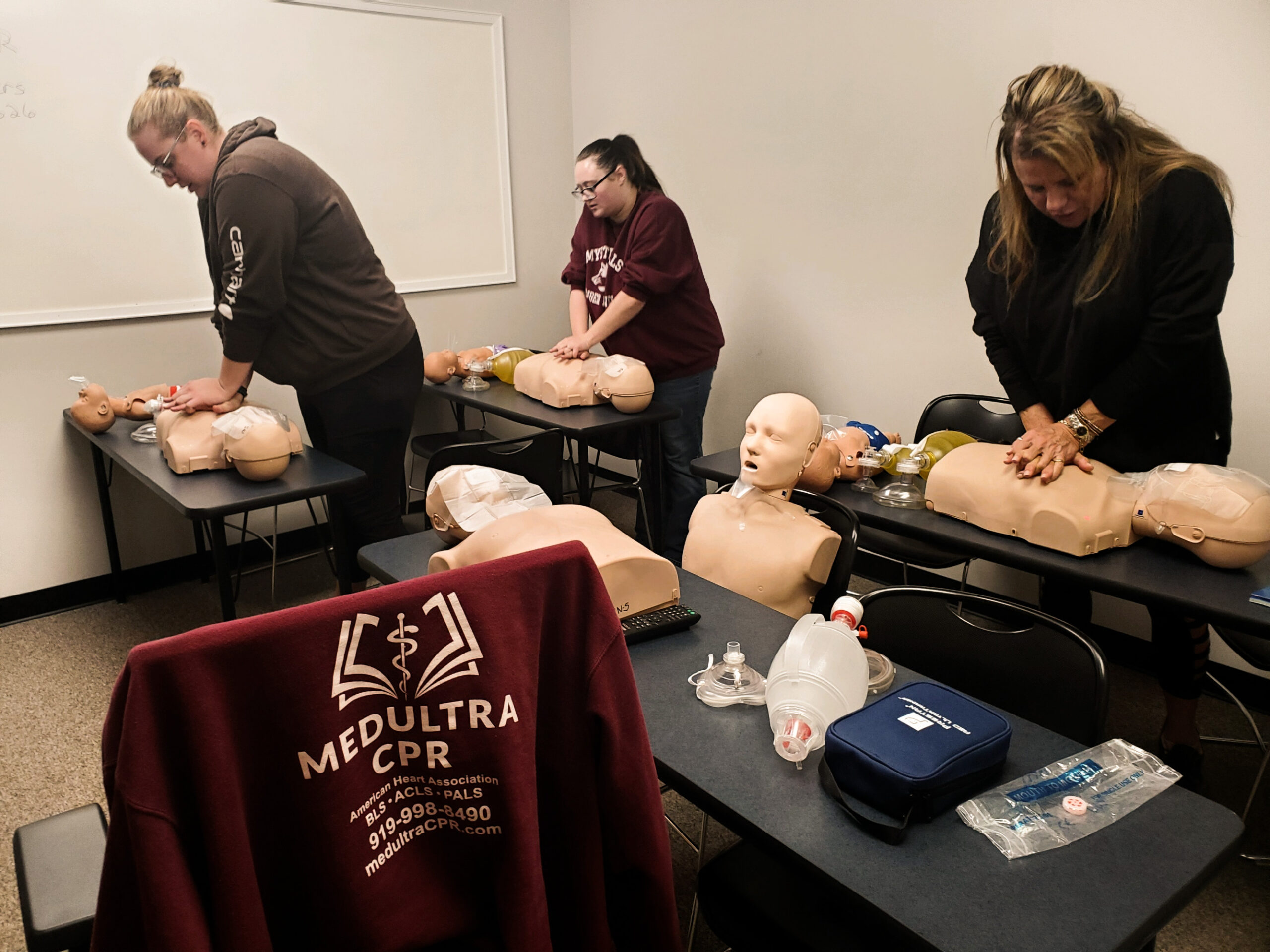
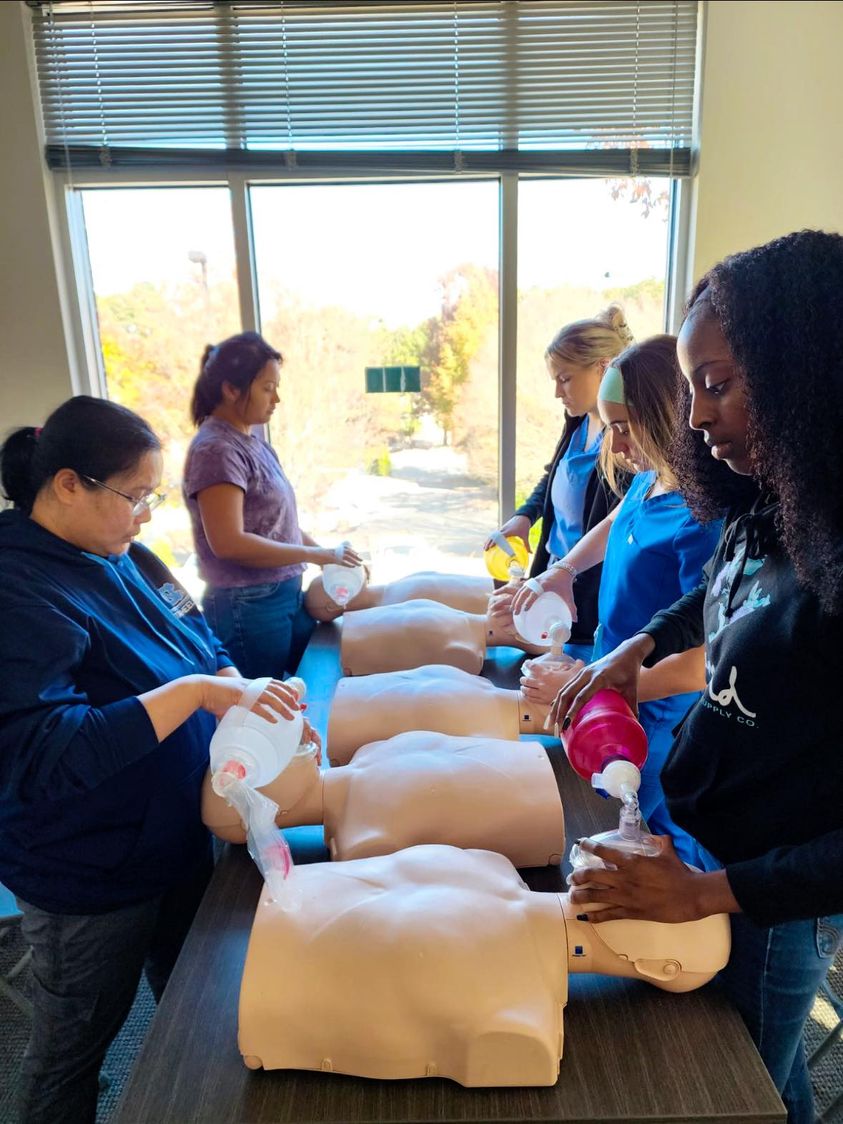
Yes. All certification courses include hands-on practice and skills testing using CPR manikins.
There is no minimum age.
However, effective CPR depends more on physical ability than age.
Most students find CPR classes engaging and easy to follow.
Our instructors guide you step-by-step using hands-on practice, helping you build confidence performing CPR and using an AED—even with no prior experience.
All courses offered at MedUltra CPR are taught by certified American Heart Association and American Red Cross instructors, many having healthcare or emergency response backgrounds.
Class size varies by course but follows strict instructor-to-student ratios to ensure quality training and hands-on practice.
Some courses require materials or pre-course work.
The details for all requirements are listed in the course description & your New Enrollment email that is delivered after completing registration.
Wear comfortable clothing suitable for kneeling or bending during hands-on skills practice.
If you have physical limitations, notify your instructor for accommodations.
Find FAQs for the MedUltra CPR by Location
Select a MedUltra CPR location below to view a collection of Frequently Asked Questions (FAQ) specific to the respective training facility.

MedUltra is Here to Help
Locate Your Course Completion Certificate
Click to for assistance locating your issued course completion card